Key Takeaways
- Shank is the whole difference: SDS Plus = 10 mm shank with 4 slots, SDS Max = 18 mm shank with 5 slots. They do not interchange.
- Bit range in our catalogue: SDS Plus 4–32 mm × 110–1000 mm (175 sizes); SDS Max 8–40 mm × 220–1000 mm (134 sizes). The overlap is 8–32 mm.
- Tool class decides: SDS Plus hammers weigh 2–4 kg with roughly 1.5–3.5 J impact energy; SDS Max hammers 5–12 kg with roughly 6–20 J.
- An SDS Max-to-SDS Plus adapter exists but wastes most of the hammer's energy; the reverse is physically impossible.
- Rule of thumb for distributors: stock SDS Plus 5–16 mm deep, SDS Max 16–32 mm deep, and let 10–14 mm overlap decide itself by the hammers your customers own.
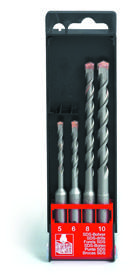
Short answer: SDS Plus and SDS Max are two sizes of the same idea — a slotted shank that slides into a rotary hammer and lets the piston hammer the bit directly. SDS Plus has a 10 mm shank and covers roughly 4–32 mm holes on 2–4 kg hammers. SDS Max has an 18 mm shank and covers 8–40 mm holes (and large core bits and chisels) on 5–12 kg hammers. They are not interchangeable, and the choice is made for you by the hammer, not by the bit.
That is the version that fits on a product card. The rest of this guide is what we tell purchasing managers who have to decide which sizes to put in a container — written from the factory floor in Yueqing, where we have made both systems since the 1990s.
The shank is the whole difference
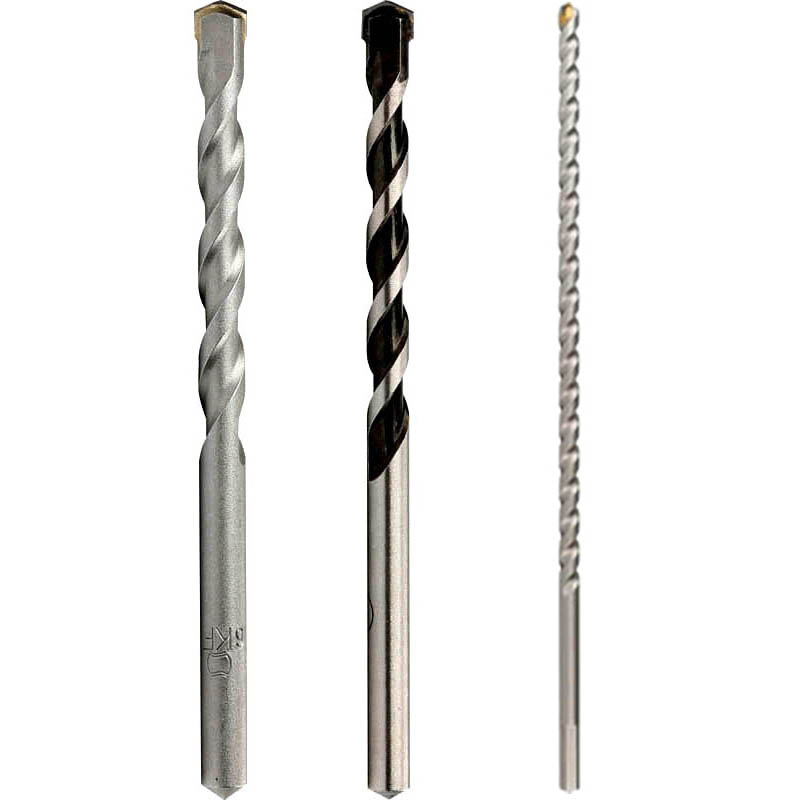
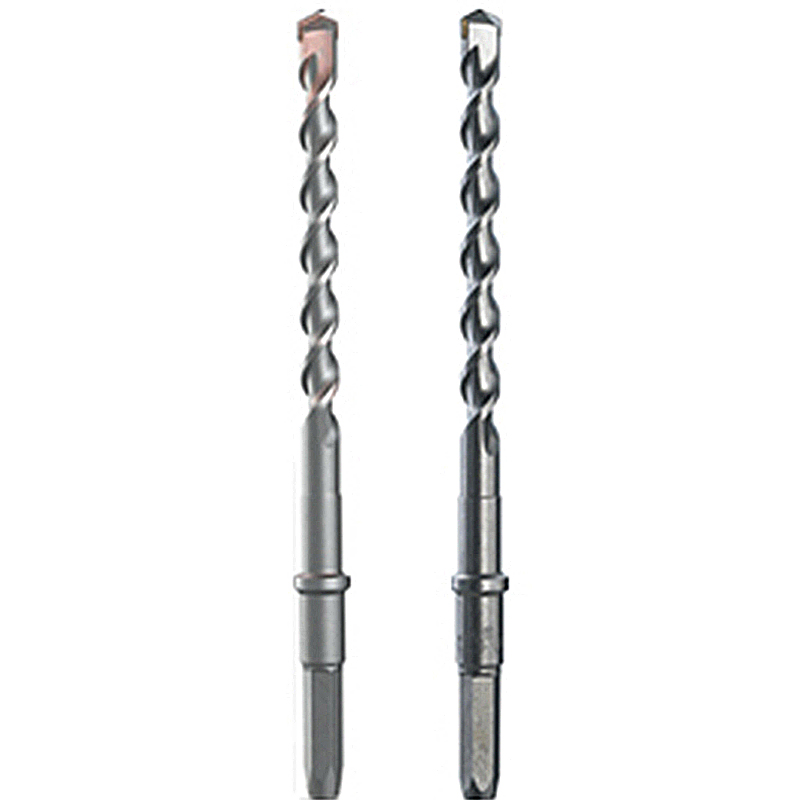
Put a 6 mm SDS Plus bit next to a 6 mm straight-shank masonry bit and the business end looks the same: steel body, spiral flute, brazed tungsten-carbide tip. The difference is the back end.
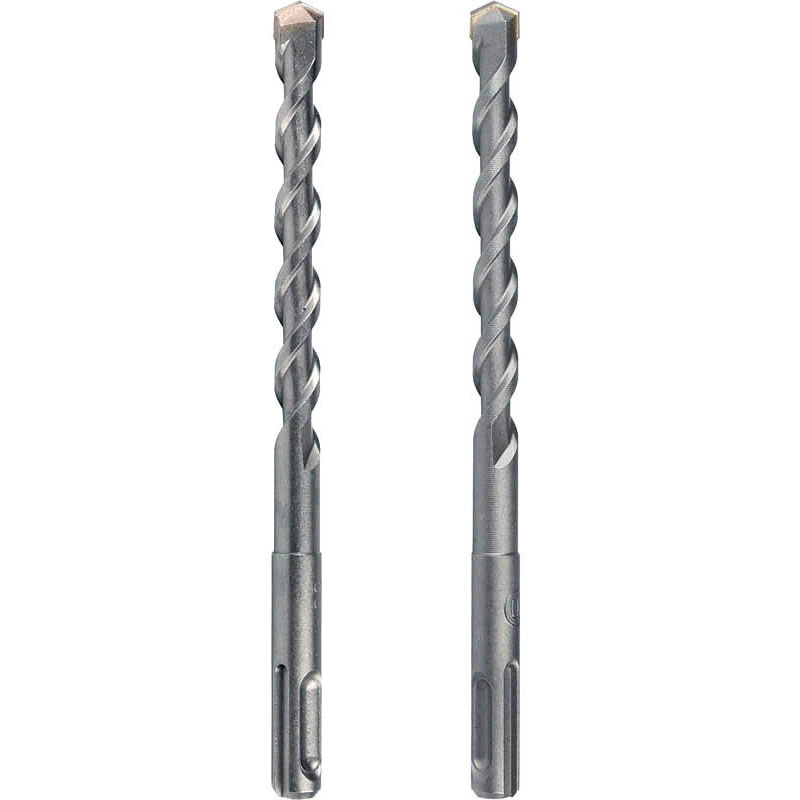
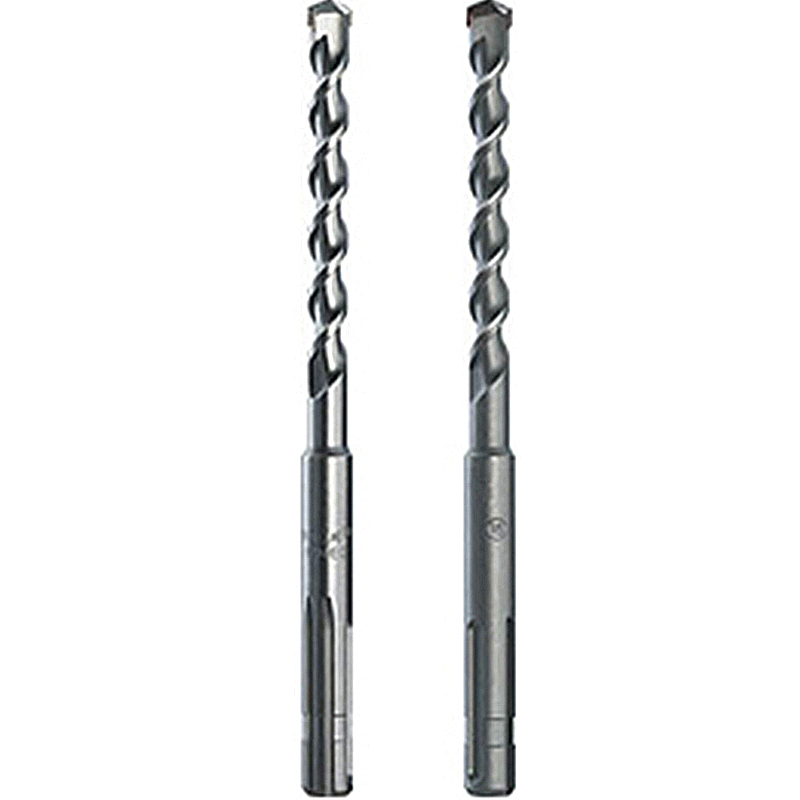
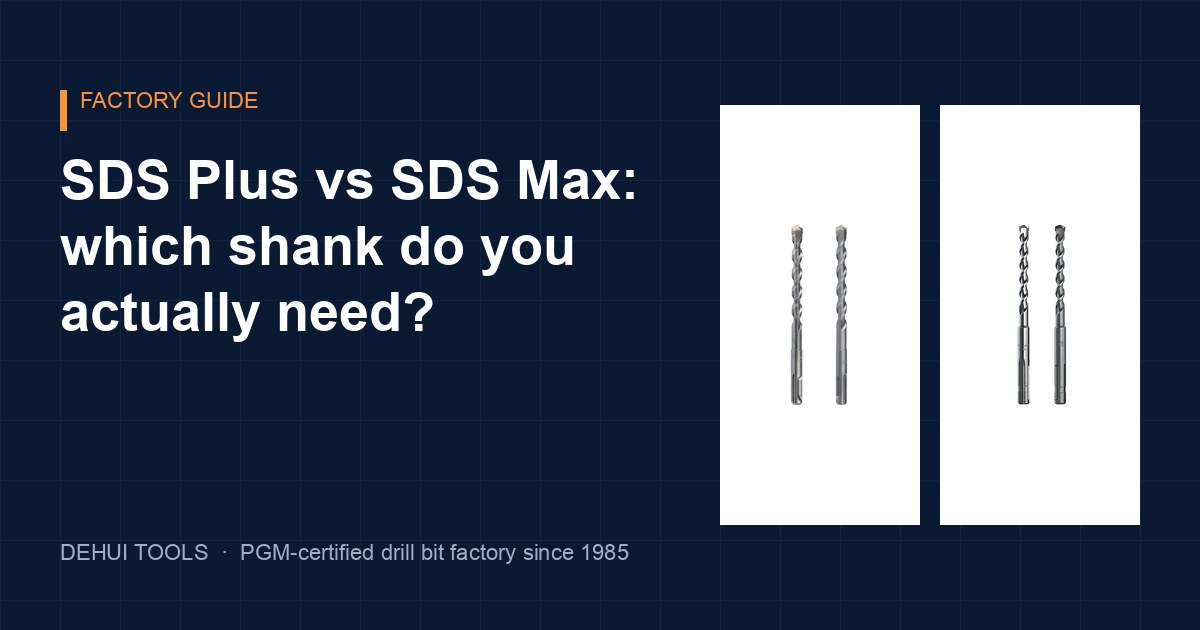
An SDS Plus shank is 10 mm in diameter with four longitudinal slots: two open guide grooves that transmit torque and two closed locking grooves that the chuck balls drop into, so the bit can slide 10–12 mm back and forth but cannot fall out. “SDS” is Bosch’s 1975 Steck-Dreh-Sitz (“insert, twist, seat”) system; “Plus” is the 1980s revision that added the second pair of grooves and became the world standard for light rotary hammers.
An SDS Max shank is 18 mm in diameter with five slots — three open torque grooves and two closed locking grooves — introduced in 1990 for heavy hammers. The larger section carries roughly three times the cross-sectional area, which is what lets it survive 20-joule blows without mushrooming.
| SDS Plus | SDS Max | |
|---|---|---|
| Shank diameter | 10 mm | 18 mm |
| Slots | 4 (2 open + 2 closed) | 5 (3 open + 2 closed) |
| Introduced | 1975 (SDS), refined as SDS Plus | 1990 |
| Hammer class | Light / medium rotary hammers, 2–4 kg | Heavy rotary & combination hammers, 5–12 kg |
| Typical impact energy | ~1.5–3.5 J | ~6–20 J |
| Dehui series | DH01 (PGM certified) | DH02 (PGM certified) |
| Drilling diameters (Dehui catalogue) | 4–32 mm, 175 sizes | 8–40 mm, 134 sizes |
| Total lengths | 110–1000 mm | 220–1000 mm |
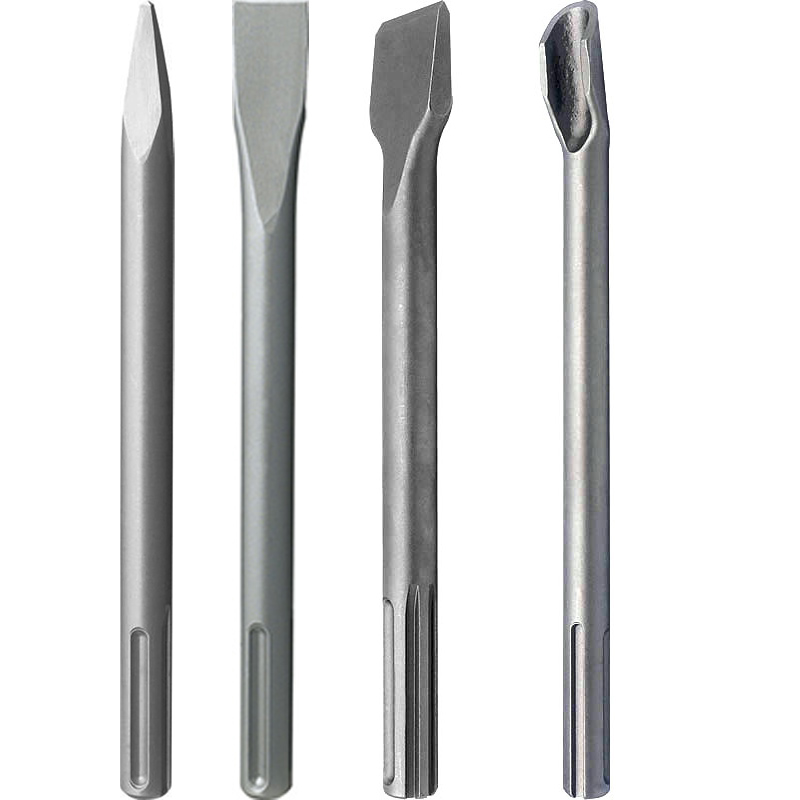
| Chisels | 14 mm shank chisels for light chasing and tile removal | 18 mm shank point, flat, spade and gouge chisels for demolition |
| Interchangeable? | Does not fit SDS Max chuck | Fits SDS Plus hammers only via adapter (not recommended) |
Impact energy figures are typical published ranges for each tool class, not a standard; a 2.0 kg SDS Plus hammer may be rated 1.7 J and an 11 kg SDS Max breaker 20 J or more.
It’s the hammer that decides, not the hole
Buyers sometimes ask us for “SDS Max 8 mm bits because the holes are small but the concrete is hard”. That gets the logic backwards.
The bit system follows the hammer in the operator’s hands. A 3 kg SDS Plus hammer at 2.5 J drills a 12 mm anchor hole in C30 concrete in about 15 seconds and the operator can do it overhead all day. A 7 kg SDS Max hammer at 9 J does the same hole in 8 seconds — but nobody wants to hold 7 kg overhead for 200 holes, and the larger hammer’s impact can shatter the carbide head of a small bit. Conversely, asking a 2.5 J hammer to drive a 32 mm SDS Plus bit works on paper (we make that size) but the hole takes minutes and the hammer runs hot.
So the practical split on a job site is:
- SDS Plus hammer: anchor holes 6–16 mm, through-holes for cable and pipe up to 25–32 mm, light chiselling and tile removal. This is 80–90 % of drilled holes in building construction, electrical and HVAC installation.
- SDS Max hammer: 16–40 mm holes for heavy anchors and rebar dowels, core bits 40–160 mm, deep holes through walls (our DH02 goes to 1000 mm), and demolition with point and flat chisels.
The overlap band, 8–32 mm, is where both systems have catalogue sizes. Within that band the SDS Max bit drills faster and lasts longer per hole, and the SDS Plus bit costs less and drills on a lighter tool. Which one a contractor buys depends on which hammer is already in the van.
Bit sizes: where the two catalogues overlap
Here is how the sizing works out in our own range. We list it because distributors often over-stock the overlap and under-stock the extremes.
| Diameter | SDS Plus DH01 lengths available | SDS Max DH02 lengths available | What it is usually for |
|---|---|---|---|
| 4–5.5 mm | 110, 160, 210 mm | — | Light fixings, plugs, electrical boxes |
| 6–8 mm | 110–460 mm | 220–280 mm (8 mm only) | M6–M8 anchors — the highest-volume sizes |
| 10–12 mm | 110–600 mm | 220–540 mm | M8–M10 anchors, cable through-holes |
| 14–16 mm | 160–1000 mm | 220–940 mm | M12 anchors, rebar dowels |
| 18–22 mm | 200–1000 mm | 220–940 mm | M16 anchors, pipe sleeves |
| 25–32 mm | 250–1000 mm | 320–940 mm | Heavy anchors, scaffold ties |
| 35–40 mm | — | 370–940 mm | Large sleeves, dowels, rock splitting |
Two things stand out. First, below 8 mm there is no SDS Max option at all, and above 32 mm there is no SDS Plus option — those ends are not a choice. Second, in the 10–25 mm overlap SDS Max offers fewer lengths but longer ones: that is the deep-hole system.
The full tables with catalogue codes are on the product pages: SDS Plus DH01 — 175 sizes and SDS Max DH02 — 134 sizes.
Compatibility and adapters
The question we get most often from first-time importers:
SDS Plus bit in an SDS Max hammer. Mechanically possible with an SDS Max-to-SDS Plus adapter (an 18 mm shank on one end, a 10 mm SDS Plus chuck on the other). We do not recommend it for anything beyond an emergency. The adapter adds 100–150 mm of length and 300–400 g of mass, so a large part of the hammer’s energy is spent accelerating the adapter rather than cutting; the bit also receives several times the impact it was designed for. Tip loss and bent shanks follow.
SDS Max bit in an SDS Plus hammer. Not possible. The 18 mm shank does not enter a 10 mm chuck, and no adapter goes in this direction because the small hammer could not drive the bit.
SDS vs SDS Plus. The same thing for all practical purposes. Original 1975 SDS bits fit SDS Plus chucks; everything sold as “SDS” today is SDS Plus.
Spline and SDS Top. Spline shank (1-3/8” range, common in North America) and SDS Top (Bosch’s 14 mm intermediate, now largely discontinued) are separate systems. Neither fits SDS Plus or SDS Max chucks. If a tender in the Gulf or Southeast Asia specifies “SDS”, it means SDS Plus unless hammer weights above 5 kg are listed.
Hex shank. Breakers and demolition hammers often use 17 mm, 19 mm (PH65), 28 mm or 30 mm hex shanks instead of SDS Max. These are chisel systems; drilling with hex shank bits is possible but rare. We make hex shank hammer drill bits and PH38 / PH65 chisels for these tools.
What changes inside the bit — and what doesn’t
A fair question from engineers: is an SDS Max bit “better made” than an SDS Plus bit of the same diameter?
In our factory, no. Both series start from the same alloy structural steel bar, get the same CNC-milled flute, have the same grade of tungsten carbide tip brazed at 1200 °C on the same German MAHLER automatic lines, and go through the same furnace heat treatment. Both the DH01 SDS Plus series and the DH02 SDS Max series carry the same PGM certification — tested for hole tolerance, tip symmetry and drilling life.
What does differ:
- Head geometry. SDS Max bits from 16 mm up are usually specified with cross (4-cutter) or solid-carbide 4-cutter heads, because they are driven into rebar-rich concrete at high energy. SDS Plus bits in the 5–12 mm anchor range are often flat (one-piece) heads for cost, or cross heads where rebar is expected. We offer seven head types across both series — see the selection guide on the SDS Plus category page.
- Flute volume. Long SDS Max bits use a deeper square or four-flute profile to evacuate dust from 500–1000 mm holes.
- Price per bit. An SDS Max bit of a given diameter costs more than the SDS Plus equivalent because of the larger shank forging and the longer standard lengths — typically 1.8–2.5 × at the factory gate for the same diameter.
How distributors should split a container
This is the part that saves money. Based on what our export customers in Singapore, Malaysia and the UAE reorder year after year:
- SDS Plus carries the volume. Sizes 6, 8, 10 and 12 mm in 110, 160 and 210 mm lengths account for well over half of all hammer drill bit units sold to contractors. Stock these deep, in both flat-head (price point) and cross-head (performance) versions.
- SDS Plus 14–16 mm and 260–450 mm lengths cover electricians and plumbers drilling through walls. Moderate stock, cross head.
- SDS Max starts at 16 mm. Below that, almost everyone uses an SDS Plus hammer. Stock SDS Max in 16, 18, 20, 22, 25 and 28 mm, mostly 340–540 mm lengths, 4-cutter heads.
- SDS Max 32–40 mm and 800–1000 mm lengths are project items. Order against a tender, not for the shelf.
- Chisels follow the hammers: SDS Plus point and flat chisels sell with every SDS Plus hammer; SDS Max point, flat and spade chisels with every breaker.
A first 20 ft container built this way typically holds 25–35 SDS Plus sizes, 10–15 SDS Max sizes and 8–10 chisel types, each at our standard MOQ of 100–200 pcs per size — which is exactly how we structure private-label programmes for new distributors. The MOQ table by pack type is on the OEM & private label page.
A note on “SDS” in tenders and spec sheets
If you are quoting against a specification, read the hammer line, not the bit line. “SDS drill bits, 6–25 mm” with hammers listed as 2.6 kg or 3.2 kg means SDS Plus. “Rotary hammer bits, 16–40 mm” with 6.8 kg or 11 kg hammers means SDS Max. Where a tender in Saudi Arabia or the UAE says “Hilti drill bits”, it almost always means SDS Plus bits for TE 2 / TE 6 / TE 30 class hammers; TE 60 / TE 70 / TE 80 class hammers take SDS Max (Hilti’s TE-Y shank is SDS Max compatible).
Where anchor performance is specified — ETA-assessed anchors, DIBt approvals — the specification will usually also call for PGM-certified bits, because the anchor’s rated load assumes a hole drilled to PGM tolerance. That is a separate topic and we cover it in What Is PGM Certification and Why Should Drill Bit Buyers Care?
Summary
- Shank size is the only hard difference: 10 mm / 4 slots vs 18 mm / 5 slots. The hammer you own fixes the system.
- SDS Plus covers 4–32 mm on 2–4 kg hammers; SDS Max covers 8–40 mm on 5–12 kg hammers. The two overlap from 8 to 32 mm; buy by hammer class in that band.
- Do not cross the systems with adapters for production work.
- Within one factory, the steel, carbide, brazing and heat treatment are identical across both series — what differs is head geometry, flute volume and price.
- Stock SDS Plus deep and SDS Max selectively; let 16 mm be the dividing line.
If you want a container plan for your market, send us the hammer brands your customers use and the sizes you sell most — we will come back with a size list and FOB prices per line within 24 hours.
FAQ
Frequently asked questions
What is the difference between SDS Plus and SDS Max?+
The shank. SDS Plus bits have a 10 mm shank with four slots (two open guide grooves and two closed locking grooves) and fit light and medium rotary hammers, typically 2–4 kg. SDS Max bits have an 18 mm shank with five slots (three open, two closed) and fit heavy rotary and combination hammers of about 5 kg and up. Because the shank diameters differ, the two systems are not interchangeable.
What is the SDS Max shank size?+
18 mm diameter. SDS Plus is 10 mm. Both are metric standards originally defined by Bosch, so a bit from any manufacturer fits any hammer of the same system.
Can I use an SDS Plus bit in an SDS Max hammer?+
Only through an adapter, and you should not for production drilling. The adapter adds length and mass, and a 5–12 kg SDS Max hammer delivers 6–20 J per blow into a bit designed for 1.5–3.5 J — the small bit overheats and the carbide tip or the shank fails early. Buy an SDS Plus hammer for small holes; it is cheaper per hole and far lighter.
Can I use an SDS Max bit in an SDS Plus hammer?+
No. The 18 mm shank will not enter a 10 mm chuck and no adapter exists in that direction, because the smaller hammer could not drive the bit anyway.
Are all SDS Plus bits the same size?+
The shank is always 10 mm, so every SDS Plus bit fits every SDS Plus hammer. The drilling diameter is not: SDS Plus bits run from 4 mm to 32 mm in our catalogue, in total lengths from 110 mm to 1000 mm. The carbide head type also varies (flat, cross, Y, solid 3- or 4-cutter) and matters more for performance than the brand on the box.
What is the difference between a hammer drill and an SDS drill?+
A hammer drill (percussion drill) has a normal keyed or keyless chuck and creates impact with two ratcheting discs — low energy, high frequency. It takes straight-shank masonry bits. An SDS rotary hammer uses a pneumatic piston to strike the bit and an SDS chuck that lets the bit slide back and forth. It drills concrete 3–5 times faster and is the only sensible choice above about 10 mm diameter or in reinforced concrete.
Which is better for anchor holes, SDS Plus or SDS Max?+
Match the anchor diameter. Most mechanical and chemical anchors from M6 to M12 need 8–14 mm holes — SDS Plus territory. M16 and above (16–28 mm holes) and deep rebar-dowel holes are SDS Max work. What matters for anchor performance is hole tolerance, which is what PGM certification tests — both our SDS Plus (DH01) and SDS Max (DH02) series are PGM certified.